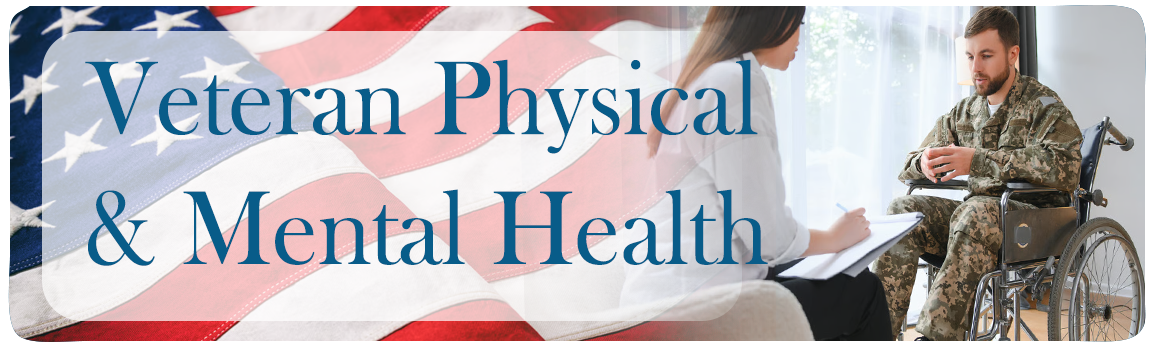
Over the past 2 years, which coincides exactly with my involvement and interaction with the Veterans Administration healthcare system, I have noticed a disturbing trend. Military Veterans are very reluctant to engage with and trust the designated healthcare system that is designed to meet the needs of post service men and women. I will preface all my discussion below by stating up front that 100% of my knowledge and understanding on this topic is from direct observation and discussions, exclusively with service connected men. I mention that fact because, I believe there are significant differences between male and female perceptions and actions related to self-care and self-advocacy when it comes to physical and mental care.
The article below is my ideas and concepts that have been enhanced with applicable supportive research information through the use of ChatGPT. I’ve discovered and am working through a process that allows me to generate concise and relevant content but that also maintains the focus on my core ideas and concepts. At the end of the article I’ve added some personal observations that support the main points of the article as well as my own thought s both before and after fully engaging with health and psychological support services through the Veterans Administration.
Military Conditioning, Veteran Health Outcomes, and Barriers to Care
Hypothesis
The military actively and intentionally trains service members to suppress or ignore physical and psychological limitations in order to maintain operational readiness. While this conditioning is necessary for mission success, the learned behavioral patterns persist after military service and can become part of the decision-making logic that discourages veterans from seeking medical or psychological care.
U.S. military veterans experience disproportionately high rates of mental health challenges compared with the general population, and these conditions frequently coexist with serious physical injuries sustained during service. Research conducted by the United States Department of Veterans Affairs and the National Institutes of Health has consistently shown elevated rates of conditions such as Post-Traumatic Stress Disorder, depression, anxiety disorders, chronic musculoskeletal pain, and Traumatic Brain Injury among veterans of modern conflicts. A widely cited report from the RAND Corporation titled Invisible Wounds of War (Tanielian & Jaycox, 2008) estimated that roughly 18–20% of veterans returning from Iraq and Afghanistan experienced PTSD or major depression, while approximately 19% reported probable traumatic brain injury during deployment. The study further noted that nearly half of those experiencing mental health conditions did not seek treatment, highlighting a major gap between need and utilization of care.
Physical trauma frequently compounds psychological stress. Combat environments expose service members to blast injuries, heavy physical loads, sleep deprivation, and repeated deployments that increase the risk of chronic injury. Research from the Defense and Veterans Brain Injury Center has documented hundreds of thousands of diagnosed traumatic brain injuries among U.S. service members since 2000, many of which are associated with blast exposure during combat operations. Studies published in the Journal of Head Trauma Rehabilitation and Neurology have shown that individuals with TBI are significantly more likely to experience PTSD, depression, and long-term cognitive impairment. This combination of neurological injury and psychological trauma produces complex health conditions that require integrated medical treatment, yet these are precisely the types of conditions veterans often delay addressing.
A key factor shaping veterans’ responses to these health challenges is the culture of endurance embedded within military training and operational doctrine. Within the institutional structure of the United States Department of Defense, service members are trained to prioritize mission accomplishment and maintain operational capability even under extreme physical or psychological strain. Military training environments emphasize concepts such as “mission first,” “pain is weakness leaving the body,” and the expectation that individuals continue functioning despite fatigue, injury, or emotional stress. These principles are necessary in combat environments where hesitation or incapacity can endanger an entire unit. However, behavioral science research has demonstrated that such conditioning can produce long-lasting psychological norms.
A study conducted by researchers at the Walter Reed Army Institute of Research examined attitudes toward mental health treatment among active-duty soldiers and found that concerns about appearing weak, harming career advancement, or letting down fellow service members were among the most frequently reported barriers to seeking mental health care. Similarly, research published in the journal Military Medicine by Hoge et al. (2004) surveyed returning combat soldiers and found that over 60% of those who screened positive for mental health conditions expressed concern that seeking help would be perceived negatively by leadership or peers. This demonstrates how institutional and cultural expectations can influence personal decisions about health care.
Even after transitioning out of the military, these learned behaviors often persist. Veterans may continue to interpret physical pain or psychological stress as challenges to endure rather than symptoms requiring medical evaluation. A 2014 study from the National Center for PTSD found that many veterans delayed seeking mental health treatment for years after leaving service, often until symptoms significantly interfered with employment, relationships, or daily functioning. The research identified internalized military cultural values—such as self-reliance, stoicism, and reluctance to burden others—as major factors influencing these delays.
The reluctance to seek care can be further compounded by perceptions surrounding veteran healthcare systems. Many veterans receive medical services through the United States Department of Veterans Affairs, which operates one of the largest integrated healthcare networks in the world. The VA provides extensive specialized services for veterans, including trauma rehabilitation, prosthetics programs, and dedicated mental health treatment centers. However, studies have shown that veterans’ perceptions of the healthcare system significantly influence their willingness to engage with it. For example, a 2018 analysis published in Health Affairs examining access to VA healthcare found that administrative complexity, geographic access limitations, and perceptions of long wait times were frequently cited by veterans as reasons for delaying care. Although the VA has implemented major reforms to improve access, including telehealth expansion and the Veterans Choice Program, lingering public narratives about inefficiency can still affect attitudes toward seeking treatment.
This interaction between military cultural conditioning and healthcare system perceptions creates a reinforcing cycle. Veterans trained to tolerate pain and stress may already feel reluctant to pursue medical treatment, and any perceived obstacle—such as scheduling delays, paperwork, or unclear eligibility requirements—may reinforce the decision not to seek help. Research conducted by the RAND Corporation and published in the American Journal of Public Health has suggested that veterans who delay early treatment for PTSD or depression are significantly more likely to develop chronic symptoms, which can increase the difficulty and cost of later interventions. Untreated conditions can also contribute to secondary challenges such as unemployment, substance abuse, or social isolation.
Addressing this issue requires both cultural and systemic solutions. Healthcare providers and policymakers increasingly emphasize reframing help-seeking behavior as an extension of the resilience and responsibility that military service members already value. Programs developed by the Department of Veterans Affairs National Center for PTSD and similar institutions encourage veterans to view medical and psychological care as tools for maintaining long-term operational readiness in civilian life. At the same time, continued improvements in healthcare accessibility—such as expanded telemedicine services, streamlined enrollment procedures, and increased integration between civilian and veteran health systems—can reduce practical barriers to treatment.
Recognizing the lasting influence of military training is essential to improving veteran health outcomes. The same mindset that enables service members to perform effectively under extreme conditions can inadvertently discourage them from addressing injuries and psychological trauma after their service concludes. By understanding this cultural context and designing healthcare systems that acknowledge it, policymakers and medical professionals can develop strategies that encourage earlier engagement with care and ultimately improve the long-term well-being of those who have served.
Supporting Observations
Over the past two years I have been immersed in the veteran administration culture and almost every program they offer in support of my ALS condition. I’ve met and discussed health care and mental health support with numerous veterans including those I work with on a daily basis as well as individuals that I’ve met through nonprofit organizations and VA care appointments. One of the reasons I’m writing this article is because of trends I’ve noticed and that disturb me when it comes to mental health and physical health care for veterans.
In almost every situation and discussion about veterans and health care there is a negative connotation to getting services and accessing programs. In many instances, there seems to be a reluctance by veterans to use programs and access care that is available to them. There are three main reasons that I have identified and that keep coming up when I think about interactions with veterans.
The most prominent reason that most veterans are not accessing the care they are entitled to is because they don’t deem themselves worthy of specialized care. There seems to be a prevailing thought pattern that veterans are taking advantage of a system and gaining resources that others cannot access. These thoughts often stem from the idea that they can power through and not inconvenience others with their physical and mental needs.
The second main reason that I have found veterans not using health care benefits or mental health services is because they have made an initial attempt to access those services and were met with immediate resistance. Either their claims related to service connection have been denied or the process and red tape required to access programs takes too long. In many cases, the wait times or under capacity of local access points exceeds the patience of those seeking care and they simply give up. It seems like veterans are willing to take any opportunity provided to not persist and continue to engage the veteran administration health care system.
The 3rd and most frustrating reason that veterans are not getting care that they need seems to be related to a lack of understanding or knowledge of specific programs that can benefit them. It has been my experience that if you don’t know the right keywords or tricky phrases to use and ask for things or you don’t know the right person or phone number to call then it is difficult to even find the right avenue to request care. I have heard many stories about Veterans not knowing about programs simply because they didn’t know to ask AND more importantly no one provided guidance to ensure they were getting all the care they were entitled to access.
I don’t claim to have any special knowledge or access to healthcare resources but I do have one thing that has become more and more of a necessity and that is tenacity! I do not accept no as the answer to my questions and I do my own research so that I come to any discussion or inquiry about a service knowing more than the person I’m on the phone or meeting with. This strategy often results in the VA personnel learning something new about a program they didn’t even know existed or was available. In those instances I have to take a step back and objectively asked the question why is this the norm for veteran care?!
My Personal VA Care Story
VA healthcare was always my backup plan for any type of long term care. My primary care up until January of 2024 had always been through health insurance related to my wife’s position working for Kitsap County. The nearest VA hospital or healthcare facility was about 45 minutes away from me and I did not anticipate needing to use those services. A new local clinic was in development and building phase in Silverdale and I was reluctant to shift my primary care to the VA at that time.
My ALS diagnosis story started out with my local neurologist through primary care providers. In that system, it took almost a year for me to get to a specialist to be able to ask the right questions and receive the right testing to narrow the condition down. At some point in that process, I began to be denied for testing that the primary care provider did not deem necessary because they couldn’t find an answer to my condition. After being referred to an external neurologist who performed the most definitive test for ALS which is an electromyography, I was fairly certain I knew I had ALS. It was literally on a whim that I decided to try and get a diagnosis through the veterans administration health care system.
I used the MyHealthVet online website to request a primary care physician telehealth call and it only took about 15 minutes for the doctor to accept my information and process my request to see the ALS team at the Seattle VA hospital. In less than a month I had an initial diagnosis visit. This visit was with University of Washington ALS specialists who concentrate and study ALS instead of a meeting with a Doctor Who may have seen ALS once or twice in their long careers. Things happened extremely fast from that point forward.
I was assigned to a multidiscipliney care team at American lake VA hospital where I now go for quarterly ALS clinic day appointments. This is by far the most comprehensive and proactive healthcare program I have ever heard of or been a part of. Every 3 months I literally show up and sit in one room while multiple specialists, doctors and even social workers meet with me either in person or virtually over the course of six hours. They ask all the right questions and know all the programs that I could benefit from and there is even a veteran service organization called the paralyzed veterans of America (PAV) who meet with me that day to see if they can assist with paperwork or resubmission for enhanced VA monetary benefits. In almost every category they suggest services that their other ALS patients have used or that have changed recently. I am currently using nearly every healthcare related benefit that is available through the veterans administration.
I definitely know and understand that my very positive veterans administration interactions are not the norm and I feel very lucky to have inadvertently made the best health care decision of my life. With that said, I hear a lot of stories about individuals who did not receive the care they needed or the process was too difficult and time consuming that they gave up and just accepted there health concerns. I personally try to engage veterans whenever I talk to them about health care to ensure they know about programs and encourage them to get the help and care they need.


